
My Sql Mac Download
MySQL Workbench is a unified visual tool for database architects, developers, and DBAs. MySQL Workbench provides data modeling, SQL development, and comprehensive administration tools for server configuration, user administration, backup, and much more. MySQL Workbench is available on Windows, Linux and Mac OS X.
MySQL Workbench Home
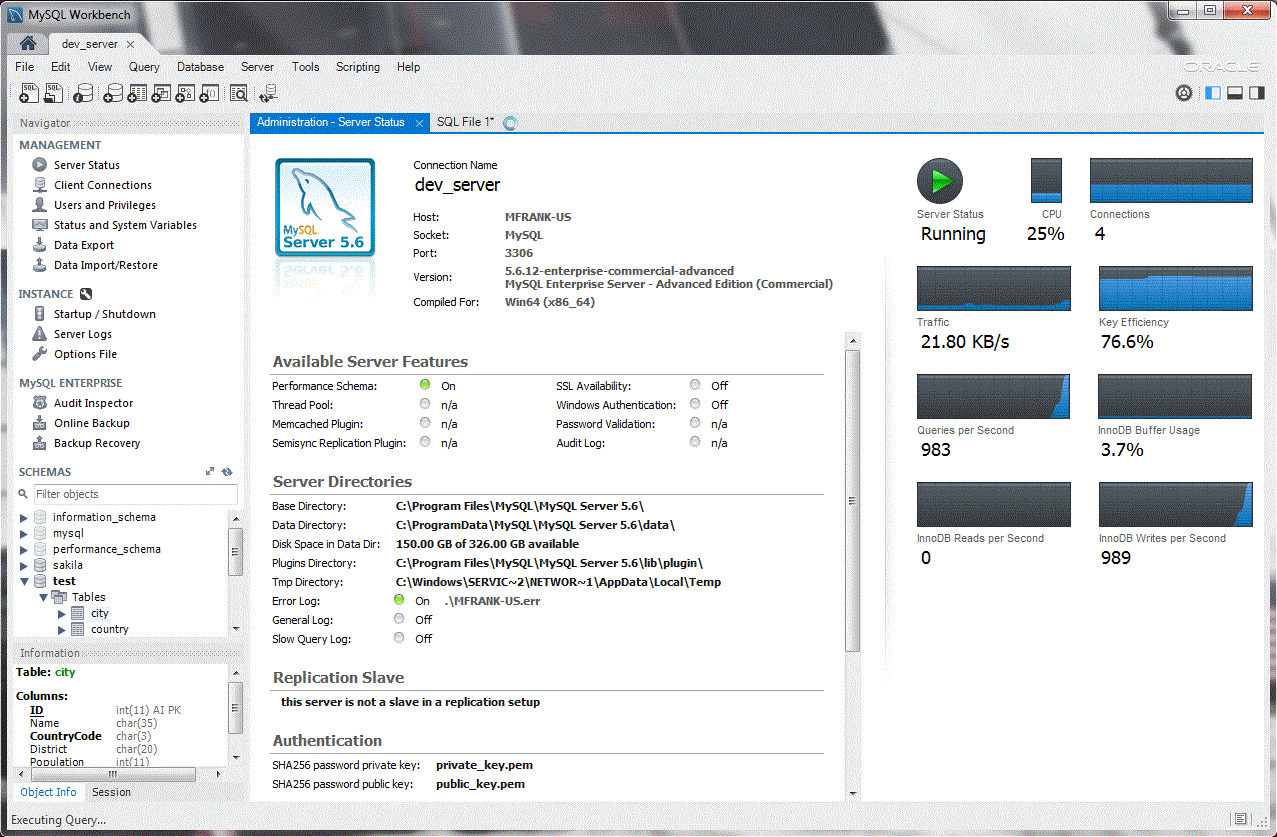
View Screenshot:
Windows, Linux, OS X
The 8.0.21 version of Mysql for Mac is available as a free download on our software library. This free software for Mac OS X was originally produced by Oracle Corporation. The file size of the latest installation package available is 177.2 MB. Our antivirus check shows that this Mac download is clean. Mac OS doesn’t come along with the pre-configured version of MySQL, but this step by step guide will make the task easy for you. By the end of this tutorial, you will be able to set up the MySQL server on your Mac system for local development purposes. Download MySQL Server.
Visual Database Design
View Screenshot:
Windows, Linux, OS X
Performance Dashboard
View Screenshot:
Windows, Linux, OS X
Design
MySQL Workbench enables a DBA, developer, or data architect to visually design, model, generate, and manage databases. It includes everything a data modeler needs for creating complex ER models, forward and reverse engineering, and also delivers key features for performing difficult change management and documentation tasks that normally require much time and effort.
Learn More »
Develop
MySQL Workbench delivers visual tools for creating, executing, and optimizing SQL queries. The SQL Editor provides color syntax highlighting, auto-complete, reuse of SQL snippets, and execution history of SQL. The Database Connections Panel enables developers to easily manage standard database connections, including MySQL Fabric. The Object Browser provides instant access to database schema and objects.
Learn more »
Administer
MySQL Workbench provides a visual console to easily administer MySQL environments and gain better visibility into databases. Developers and DBAs can use the visual tools for configuring servers, administering users, performing backup and recovery, inspecting audit data, and viewing database health.
Learn more »
Visual Performance Dashboard
MySQL Workbench provides a suite of tools to improve the performance of MySQL applications. DBAs can quickly view key performance indicators using the Performance Dashboard. Performance Reports provide easy identification and access to IO hotspots, high cost SQL statements, and more. Plus, with 1 click, developers can see where to optimize their query with the improved and easy to use Visual Explain Plan.
Learn More »
Database Migration
MySQL Workbench now provides a complete, easy to use solution for migrating Microsoft SQL Server, Microsoft Access, Sybase ASE, PostreSQL, and other RDBMS tables, objects and data to MySQL. Developers and DBAs can quickly and easily convert existing applications to run on MySQL both on Windows and other platforms. Migration also supports migrating from earlier versions of MySQL to the latest releases.
Learn more »

Additional Resources
This should be really straightforward, but I found myself googling around. I wrote a recent post about how to create a web app with the Laravel PHP framework but connecting to the database was tricky.
First step, find out what version of OS X you are running. Click the apple icon in the top right corner of your screen and click “About This Mac”. I got something like this:
Next step, head over to the MySQL downloads page.
So with my computer I am running 10.11 and we want the .dmg file. Download Mac OS X 10.10 (x86, 64-bit), DMG Archive. Then you get to this lame screen:
MySQL is free and open source software (FOSS), you do not need to sign up or create an account. Click “No thanks, just start my download”. I let the download go directly to my “Downloads” folder when prompted, though you could place it anywhere. The download will take some time because it is 350mb, go get a coffee. Once the download is complete. Double click the file and a screen like this will open
Double click it and go through the install process.
When I did it I got an alert box:
Add to path. This went in ~/**.zshrc **because I am using ZSH. If you are using bash for terminal (the default on OS X) this will be the ~/.bashrc file or ~/.bash_profile. This post explains the difference between the two files.
Add the mysql download to your path so that you can use the “mysql” command from the command line.
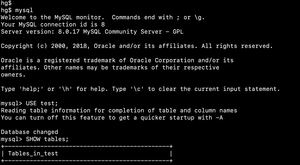
Then test it out:
Now that we have MySQL installed and accessible from the Terminal, it’s time to connect to the database and start the MySQL server. Let’s log in as root user (root@localhost) and use that funky password that popped up in the alert window after our install. In the above case it’s #fW&tYe?<8?w
Great! Now we can create databases and run SQL queries right from the command line. That’s an awesome start, but there’s no way anyone is going to remember that password, nor is it enjoyable to type in every time we want to run MySQL. The full docs on changing passwords are here. For OSX you can run the command:
The PASSWORD('root') sets my password to “root”. Easy to remember right? You can set your password to anything you like, such as PASSWORD('myN3wp@Ssw0rd').
To stop the server in the terminal run control + D. Congratulations! You’ve installed MySQL on OSX, made it accessible from the command line and updated your password for the root user.
To start setting up a Laravel application and connect to a database using Sequel Pro you can follow my next tutorial:
Thanks for reading!
Update (9/16/17): Expired passwords
When trying to login to MySQL on OSX recently I ran into the following error:
There are a lot of StackOverflow threads and articles about this, many require writing SQL commands, though that was difficult for me without access to the terminal. In order to alleiviate this I found this SO answer that saved me:
Update 03/29/18:
Download Mysql Workbench For Mac
- Helpful steps for Install MySQL on macOS Sierra as a gist link.
Update 05/14/19:
Download Mysql Database For Windows
- I recently ran into an error when trying to fire up the MySQL shell:
Mysql Client Download
Install Mysql On Mac
I found the solution in this homebrew issue. Create an empty directory for this path: mkdir /usr/local/etc/my.cnf.d